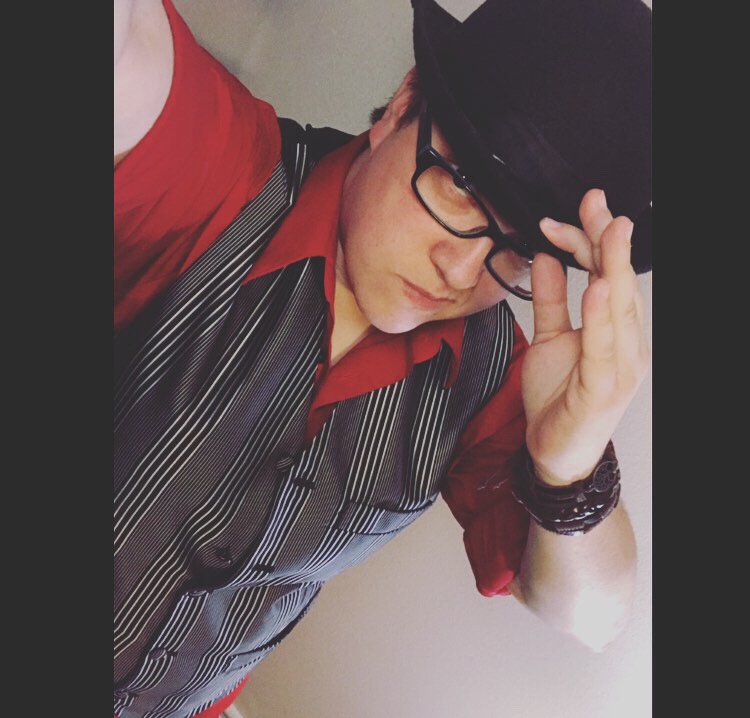
Wednesday, March 11, 2020

Rise and Shout, the Cougars are Out of the Closet: Pt 2

Aight, friends. I’m back. Now let’s see if we can get to the bottom of this BYU thing in an orderly fashion. (As if my brain could ever be categorized as orderly.)

So what is this about, at its core? What is the deal here?

It could be categorized as a political brawl of left vs. right. A charged atmosphere of different governmental ideas.

It could be categorized as a civil war. A brother vs brother/sister vs sister clash, dividing a people into deeply entrenched factions.

It could be categorized as “Religion vs. Science!” or “Tradition vs. Progress!” or “Homophobia vs. Civil Rights!” 

And while some of those things are technically true, I don’t see any of it as being the important part. Reason: because all of that focuses too much on ideology and too little on people. If you take the human element out of something, it’s very, very easy to end up with collateral damage. 

And that is what happened here, a few days ago. Collateral damage.

The Human Element


Think how easy it is to hear casualty numbers from a war and go “oh, that’s horrible!” before kinda moving on with things. Even if we’re empathetic, emotionally intelligent people, numbers are numbers. They will never feel the same as “your son was one of the casualties.”

You can see it in movies. In books. In plays. In all of the stories of human history, personal connection makes something far more real than numbers ever will. Thousands of people dying in a grand space battle doesn’t mean all that much, even if the universe is at stake. The universe is too big a concept. But when the one heroic space fighter flies into certain doom to save a friend... now that means something.

Have you ever been to a Holocaust museum? Have you ever felt the weight close in on you at something so simple as seeing a pair of shoes that belonged to someone real? That pair of shoes can bring an entire era of our world history into a clearer perspective. 

That’s why the Diary of Anne Frank is such a big deal. Not because it’s a work of literary genius, but because they’re real words from a real person speaking to us from beyond a too-early grave. 

Now, let’s not pretend that the BYU thing is akin to the holocaust. That would be absurd. But the principle of storytelling remains the same: if you take out the human element, you forget people. And when you forget people, it’s easy to hurt them.

That is why the BYU policy changes went so very wrong. The changes were made by people who were thinking of strategies and policies and politics. No one asked anyone LGBT+, “Hey, what do you think of this wording change? How would you interpret it based on your situation?”

No one asked an editor, “hey, is there any ambiguity in this statement we’re about to officially release?”

No one asked, “Well, I know this change isn’t a real change, and YOU know this change isn’t a real change, but will our students who weren’t part of the creation process know and understand that this change isn’t a real change?” or even “is this a problem that the change isn’t real?”

Not only did no one ask that, but no one even thought to. And when they realized they’d messed up, they sat on the retraction for two entire weeks before getting around to doing anything about it. Because timing and policy and press were more important than wondering what was going to happen to the people affected.

And honestly, it doesn’t really matter whether they meant to hurt anyone by it, because the fact is they still did. Thoughtlessness is thoughtlessness.

You Don’t Know What You Don’t Know


The thing here is that it’s really hard to think about or consider things that don’t personally affect you. If you are white, skin-color prejudice does not affect you. If you are male, misogyny does not affect you. If you are straight, homophobia does not affect you. Etc. Etc. Etc. 

As I mentioned in my other post (What is Pride, which you can read here if you want.) it’s very easy to feel like any voices are too loud if silence has been the status quo so far. It’s very easy to wonder why people are making such a big deal out of things. And it’s very easy to not even realize what questions you should be asking in order to be helpful, rather than harmful. 

I have every confidence that most of the leaders at both BYU and church headquarters don’t think they’re doing the wrong thing. I’m sure a lot of them don’t realize who gets hurt by these things. And I’m quite sure that most of them have absolutely no context or experience whatsoever that would allow them to grasp the ramifications of this fiasco.

I doubt it occurred to anyone that taking out the wording would even make people take notice, until everyone did and all the people making the change suddenly realized what had happened. 

And that’s why it’s important to listen. To learn. To be prepared for a new perspective. To be able to adjust mindsets and soften hearts, when it comes to people that are different than you.

“But if you walk the footsteps of a stranger, you’ll learn things you never knew you never knew.”

Now as for the actual content of the policy change…


We’ve established that the process here was a raging hurricane of bad decisions and poorer responses. Whichever side of the content question is right, the execution was wrong. 

But the content here does matter too. 

I’m not gonna dwell on this for too long. This is a fight I won’t win with one blog post. After all, it’s basically a struggle between people who are living certain life experiences within a church that does a terrible job protecting them, and the lifelong cultural traditions of the rest of the people in that church who easily fit into it and see nothing wrong.

I can’t break those cultural traditions with one voice. But if I add my voice to others, maybe it’ll do… something.

Anyway.

The core of the content debate revolves around “Is it okay for gay people to do gay things or not?”

Which is not a complicated question until you add religion into it. There are still a lot of religions around the world that categorically and emphatically say, “no it is not.” This church is one of them.

And that’s largely why there’s such a big fight. If something that you have always considered a core tenet of your faith gets questioned by an institution of your faith, there’s going to be some cognitive dissonance and/or pushback. The gut instinct to fight back or plug your ears and shout “I can’t hear you I can’t hear you”. 

Which unfortunately is what a lot of people are doing. 

Yet that’s the whole problem. The entire thing. There is a community of people who want to be part of this religion along with everyone else, but who get pushed out and silenced and literally given different promises/rules to follow, and they want you to listen.

For once, just listen.

They are not trying to say that God is wrong. They are not trying to say that there should be a double standard. They are not trying to say that they can tell God what to do or make eternal doctrinal changes just by voting on it. They are not trying to say “break the rules for me. I’m special.” That is not the idea. 

They are trying to say “Hey. We’re here. We need help and compassion. How about not stepping all over us anymore?”

They are trying to say, “The core tenets of this faith are ‘love one another’ and ‘do unto others as you would have done unto you’ and ‘comfort those that stand in need of comfort.’ When you disregard us, or make places unsafe for us, you are not following those tenets.”

They are trying to say, “Hey, you leave us out an awful lot. How about considering us, too, when you make policies and rules?”

They are trying to say, “God’s church should be safe for those who need safety.”


And maybe they’re also trying to mention that God is perfect, but humans aren’t. This certainly isn’t the first time that a cultural misconception has morphed into a “law”. 

1978 Happened


The church that runs BYU is known famously for a few things: 

  • Being pretty aggressively conservative.
  • For missionaries going around the world knocking on doors and preaching.
  • For having more books of official scripture than other Christian religions.
  • For a not-super-factual-but-apparently-entertaining musical on Broadway.
  • A history of polygamy.
  • And, unfortunately, it has a reputation for not being a great place for minorities. 

That last one is the biggie right now. There are many church policies that are staunchly anti-gay. And there have been other policies in the past that were staunchly bigoted toward other groups of people. 

At the time that those history policies were in play, it was considered doctrine. An eternal principle that just happened to exclude several not-that-small populations of people from the full extent of church membership that everyone else got to have. 

(See Official Declaration #2 here)

For fairly obvious reasons, this was pretty divisive. On the one hand, many people had a hard time understanding how a fair and loving God could be racist. How could it possibly make sense that some humans got to have religious things that others didn’t, based entirely on where their ancestors came from. 

On the other hand, a lot of people—largely those unaffected by the policy—relied mostly on “God isn’t wrong. There must be a reason.” And while the thought itself isn’t a bad one, it led to a lot of very, very sketchy cultural traditions within the religion, such as the erroneous idea that black skin is a curse from God that shows sin. (That one is a LOT to unpack, but let’s remind each other for now that this is NOT a doctrine.)

I say traditions, because these things weren’t core principles of the church teachings, but thoughts and ideas that random people had, and that just kind of went viral. Once things go viral, they get so entrenched in the teachings of a culture that they sorta kinda DO become doctrines and laws. 

But in 1978, the leaders came forth like “y’all, this can’t keep going on. Here is an official declaration to make an official change.” Basically “God isn’t wrong, but we as a people were.”

Most people celebrated. A few left the religion, because to them the inferiority of non-white people had become a core doctrine. And changing that meant that they felt the religion no longer followed God. 

Here’s the thing about this church, though. There are a lot of small principles that are different from other Christan denominations. A lot of quirks that many others really don’t understand, such as the missionary program, or that we have more scriptures that other people. 

But the one single MAJOR difference—the thing that largely causes most of the other small quirks—is the principle of continuing revelation.

The idea that God still calls prophets to speak to His people, and to reveal new things. 

Yes, you read that right: the whole entire point of our church is that it continues to grow. To change. To get better. If you’re here for a church that will stay 100% the same at all times, then you are in the wrong religion. We even sing about it in our hymns. 

“The Lord is extending the Saints' understanding,
Restoring their judges and all as at first.
The knowledge and power of God are expanding;
The veil o'er the earth is beginning to burst.”


Things don’t always change quickly, and they don’t always change in a timely manner. It’s an established fact that sometimes people are stupid and need things, as we say, line upon line, precept upon precept. We aren’t always ready for changes. But they have constantly and consistently come since the beginning. That’s literally the whole point of prophets: live updates.

Don’t make us come up with a religious version of “ok boomer” because you can’t let go of old things when new ones are on the horizon.

Conclusion


So yeah. This church is not safe or particularly welcoming right now for LGBT+ people. The protests that are happening are basically saying that, and asking everyone to do better. 

I don’t know if future policies are gonna actually change or not. I don’t know the mind of any deities. I don’t have a timeline. I don’t have any kind of ability to speak for more than just myself.

But I do know a couple of things:

I know that they can change. And they might change.

And I know that whatever happens policy-wise, it is our (literally God-mandated) duty to help people, not hurt them. To bring people into our welcoming arms, not kick them out. To think about more than just ourselves, when we do anything. To stay open-minded about things that we may not understand, or have any experience with. 

I know that “the church has a policy against this” is not a good reason to act like heathens and treat people like garbage. In the words of a friend, “Were you raised in a barn by wolves?? NO. Because the wolves would know better.”

I know that a lot of people are trying harder to be good allies to minorities such as PoC and LGBT+, and that those efforts are not wasted.

I know that it is NOT against church policy to love others. The only time I can think of that Jesus ever told someone in anger to get out was while flipping the moneychangers’ tables.

With those things being said, I conclude that the policy change at BYU was ill-thought out. That it actively hurt people. That the policy makers didn’t consider a lot of things that they should have, and that people need to stop blaming the victims of this for “making assumptions” or “knowing what they were getting into.” Stop telling people to just leave if they don’t like it. That’s not how this works. That’s not how any of this works.

This isn’t about the content of the policy nearly as much as it’s about the way people are treating each other. The protesters have mobilized because this change and subsequent reversal was a last straw. People realized that they couldn’t handle it anymore and that they weren’t alone. 

And if I keep typing, I’m just going to keep rambling on and on and on. This post is long enough as is. I sincerely have no idea whether I communicated everything I wanted to say. But I tried. If you want to talk further, feel free to message me. 

Tuesday, March 10, 2020

Rise and Shout, the Cougars are Out of the Closet: pt 1

Okay, okay. I’m not into my status as a BYU alum nearly enough for that title to be the most appropriate, but I couldn’t resist the joke, and you should all appreciate the cleverness of me.

At any rate, I fully intend to bring up the BYU dumpster fire that is currently still burning strong and bright. So, ya know, it’ll still be relevant.

ANYWAY

This is something important. More important than I think a lot of my acquaintances will realize. Especially those who have seen the BYU thing happening, and don’t understand why anyone cares, or what everyone is worked up about.

It’s important enough that I’m getting on my blog, which I only do like 2–3 times a year.

It’s so important that I’d like to make this post beautifully poetic. Add turns of phrase that will make you weak at the knees. Expound my point in a way that even C.S. Lewis would stand up and applaud. When things are deadly serious, it’s my natural reaction—as for many people—to want to create something equally serious, with more gravity than a neutron star.

But that’s not what I’m good at. I’m not as quick witted as some of my brilliant friends. I’m not as sharp-tongued. I’m not as wonderfully empathetic or naturally eloquent. And I want you to read this, not fall asleep. 

So you get me. Raw, unfiltered, unserious, unable-to-not-make-dad-puns me. The me who is 57% likely to make a D&D reference at least once this post. The me who is categorically **gaaaaaaay. (The 7 As are important.)

Yes. You read that right. You would also be right in guessing that I’m scared to say that as loud as I just did. I’m 100% sure that someone I know and consider a friend is going to read that and feel very differently about me because of it.

But you know what else? I’m so sick of lurking in the shadows. I’m sick of being super cagey every time someone brings up celebrity crushes or Rom Coms or whatever it is. Because I want to participate in the conversation, but I can’t without being a little more vulnerable than everyone else. I’m tired of not remembering who knows and who doesn’t. I’m tired of panicking. I’m tired of being SUPER limited on who I talk to about things.

And you know what else I’m 100% sure about? That more people than I expect will either be not surprised at all or be super chill about it. I intellectually know that it’s really gonna be okay. But still, vulnerability is the worst. 

**Note: this is a little bit of an over-simplification, but this post isn’t about the nitty gritty details of all the scales and where I land on each one. If you want to know, message me.


So now you know. Now the whole world has public access to this knowledge. You know that the first ever celebrity who gave me stomach butterflies was Rachel Weisz in the 1999 Mummy, and that if I ever told you the name of a guy celebrity in answer to “who is your crush” 93% of the time I was lying to you.

And you know that I didn’t do this a long time ago largely because I was unreasonably slow on the uptake. Like I mentioned before, I’m a high-wisdom build more than a high intelligence. I notice everything, but don’t process it all that quickly. It often takes me time to mentally get places.

(D&D reference: check.)

This is me. 


Now, this BYU thing. Why do I want to talk about that? Well, it’s happening in the town I live in, for one thing. For two, a lot of the negative voices here are very, very loud, so a lot of people are feeling more alone than ever. Suicide rates are up, and they were already too high for the LGBT+ folks in Utah. 

As much as we’d like to pretend that we as a people are all kind and generous and loving and inclusive… Utah is not as good at that as it should be. But WE CAN BE. We can be if people get off their high horses and listen to each other for just one hot second. 

Sincerely listen. Not waiting for your turn to talk. Not laugh-emojiing things that others are trying to say. Not telling people to just get out. Not making fun of their profile pics as a form of debate. Not calling them brainwashed. Not accusing them of hatemongering. Not accusing them of lying to get publicity. And not regurgitating memorized things instead of paying attention. Check any privileges at the door and sit down for a minute.

Channel Pocahontas. “But If you walk the footsteps of a stranger, you’ll learn things you never knew you never knew.”

If you don’t know what happened this past week, the summarized version is this:

BYU as a school changed some of the language used in the honor code that each student agrees to follow. I have theories and rumors on why, but no sources to confirm them. The changes eliminated phrasing that specified “no homosexual behaviors”, essentially. 

A bunch of nervous LGBT+ folks went to the honor code office and asked “does this mean what we think it means?” And they were told “yes. Yes it does.”

And the queer BYU babies rejoiced! People came out to friends and family. People held hands on campus for the first time ever. People felt weights lifted off of their shoulders, and for two weeks the world was filled with more rainbows than ever.

Then—after TWO WEEKS of letting everyone trust what had just happened—the CES folks up in Salt Lake were like “no, no, no. This simply will not do.” They issued a letter that basically said “The wording is gone. The rule is still there. Nothing actually changed. K bye.” 

While using reasoning that is being unequally applied to ONLY LGBT+ situations.

And if that feels to you like a bait and switch, imagine how it felt to everyone who had posted pictures of themselves kissing someone on campus. Pictures that could now get them expelled. Imagine how it felt to people who finally felt safe enough to be vulnerable, only to have to suddenly hide again 2 weeks later. 

  1. That is unprofessional.
  2. It is irresponsible.
  3. It is harmful more than helpful.
  4. It was ill-thought out.

No matter whether you agree or disagree with the changes, the execution of it all was hot garbage. No editors to check that the new wording worked right. No test audience to check that it would mean to other people what they wanted it to mean. No immediacy on the retraction. All of it was handled very poorly.

Okay. Turns out this is going to be a two-parter. There’s a lot I want to say about this, but my thoughts on the whole thing are still far too jumbled to be a post yet. I’m getting to it. I promise. I just gotta get this all organized in my brain. More next time. 

Monday, October 21, 2019

The Silence of Our Friends

“In the end, we will remember not the words of our enemies, but the silence of our friends.”


This past two months has been an absolute roller coaster for me. I started a new job, after ten years in the same place. I nearly lost several friends and an entire game group because of a stark disagreement on where the line is between reasonable doubt and overt prejudice. I flew internationally for the very first time. I rank tested in Japan before several important teachers and the president of our school. I experienced a heartbreak that left me feeling utterly numb. I stayed up working until 6 or 7 in the morning on more than one occasion. 

The ups and downs have got me over here feeling like Icarus, flying high for the briefest of moments before losing control of everything. 

I got to listen to two middle-aged, white, male authors tell me about how Brandon Sanderson is doing better in his book sales than Mary Robinette Kowal because he chose to be extremely unpolitical, and she should have too, but now she’s sleeping in the bed she made. And that if I was smart, I’d do the same thing as Brandon, the white, male, married, straight, American man.

(Congratulations, boys. You’re in a position where you can ride the status quo, without anything adversely affecting you. Go you. Meanwhile I’m still over here watching people like me literally getting murdered with next to no comeuppance for the attackers.)

I had an old friend message me that all of my stances were too negative, and that things would work out for me if I just chose to smile.

(Well-intentioned. I know she was. But hoo boy. That’s a lot to unpack.)

This week I had not one but two grown, adult, should-know-better human men tell me in undisguised words that my life experience is all a lie. That I’m making it all up in a desperate bid for attention. That I have been brainwashed by SJWs to believe I’m a victim, because racism, sexism, and homophobia are just political tricks to gain control over people.

(Fun times.)

I had someone with whom I grew up, and have known for nearly all of my life, tell me literally and not implicitly that disagreeing with his extremely biased article was hate, while his friends tore me apart for what I am and not what I said.

(I can’t help but think of the phrase ‘the blind leading the blind’.)

He told me, with a tone of sincere-but-severely-misguided pain that my choices brought me to where I am, and HEAVILY implied that being gay is somehow a mistake that I chose along the way, and that he hopes I’ll turn away from. If it hadn’t been in written form, I’m sure there’d have been misty eyes and a tremor in the voice.

(Oh hey. Hi there. By the way, if you have reached this, the tenth month of the year 2019 still under the impression that I’m straight, then you REALLY have not been paying attention.)

I’m still unpacking the layers of shame he was implying. The same guy who just preached about how it’s our choices that matter just also told me that being non-straight is horrific, regardless of how I’m acting about it.

Two weeks ago, I got to listen to a speech from the leaders of my church that basically said, “Look, we have a responsibility to love everyone. And that includes LGBT+ people. But also, if you are LGBT+, basically sucks to be you. I really got nothing, here.” And I got to see all the people around me gush about how loving and inclusive it was, all the while even the leaders of my entire religion have no actual hope or encouragement to give me.

A few days ago I got to see the better part of the whole state oppose a ban on conversion therapy, and back up that opposition by talking about how the bill wasn’t written well enough. 

(So yes. It’s very comforting to know that people all over the place literally care more about legal minutiae than about protecting vulnerable people from horrific things. Such cozy. Many love.)

And that’s where the quote at the beginning comes in. (The internet says it’s Martin Luther King Jr. but I’m not 100% sure.)

“In the end, we will remember not the words of our enemies, but the silence of our friends.”

When things don’t affect you personally, it’s easy to stand aside. Let some other author use their fame and literal millions of dollars to improve the world. Why bother to change anything, when you’re doing perfectly fine?

When things don’t affect you personally, it’s easy to tell someone to keep their chin up and things will work out.

When things don’t affect you personally, it’s easy to tell someone they’re overreacting. That nothing is really THAT bad. That the 1% slight you feel when something doesn’t go your way is EVERY BIT as hard as the long-standing societized inequality someone else lives every day.

When things don’t affect you personally, it’s easy to call anger hate. It’s easy to call standing up for oneself aggression. It’s easy to claim that change is bad. That having different political priorities is ignorance and stupidity. That someone you don’t agree with is lying, brainwashing scum. 

When things don’t affect you personally, you can do and say whatever you want about it without any kind of consequence. 

Congratulations. You have privilege. 

(No, listen. You literally do.)

But, in the immortal words of every Spider-Man version ever made, “With great power comes great responsibility.”

So are you going to sit around being comfortable, because you can? Or will you do something with your abilities?

How deafening will the sound of your silence be?

Friday, August 9, 2019

Sexism is So Much More Than Just Choosing a Man Over a Woman

Tomorrow is my last day at a job I’ve been with for almost ten years. I naturally have a lot of very complicated and mixed feelings about this.

  • Rage at admin for passing me over on promotions several times.
  • Nostalgia for a lot of good times had there. 
  • A bit of fear at moving on after such a length of time.
  • Excitement at the possibility of stabilizing my financial situation a bit.
  • Adventurous about trying something new and getting to do new things.
  • Sadness at leaving behind many people I love and will miss.
  • Comfort in knowing I will certainly see them all plenty of times in the future.
  • Confusion about what I did wrong or didn’t do or didn’t have that caused my employers (and others) to more than once eliminate me in the first round when many who were objectively less qualified than me or who were equally qualified got to move forward through the processes. 

And that last one is what I want to really chat about today. The main reason: because I cannot for the life of me figure it out short of accusing them of some prejudice that I wish I didn’t have to. 

What kinds of things are you supposed to do to make a good impression on an interviewer?


—Dress nicely? Check. (I was snazzy af, y’all.) 
—Have good answers to questions? Check.
—Have a qualified and well-put-together resume? Check.
—Be actually qualified for the job? Check.
—Be charming and well-spoken? Check. Well, to the extent that I am able. I’ve never considered myself the most charming person ever, but I answered questions well, made eye contact, smiled, laughed, and didn’t do anything weird.
—Be noticeably good at the job? Check. My supervisor consistently gave me the highest possible marks on yearly evaluations. 

Of course I know and understand that being a good candidate for a job doesn’t mean I’ll get it or that someone else isn’t going to be better. I’m an adult and I can accept that. 

What I can’t accept is the result of my post-rejection comparison. 

**Note: I had most of that comparison listed out here, but it was long and boring and not really the point. Plus I don’t blame the people that got the jobs instead of me. They were just trying to get a job and had nothing to do with the hiring process.

The summarized version, however, is that the first time it looked an awful lot like he got the job instead of me because he had five things that I didn’t, four of which are illegal to discriminate on, and later situations seemed to confirm this.

—He’s extremely charming.
—He’s straight.
—He’s married.
—He has small children.
—He’s a dude. 


My having twice as much experience didn’t seem to matter. My having the same education level didn’t seem to matter. My having a desire to stay long-term while he was already planning to leave for law school as soon as he could get into one didn’t seem to matter.


All else being pretty much the same, it seemed extremely suspect that between two people who were equal in most things, the one with the slight edge in experience and longevity was cut in the first round while the other one made it through several.

But whatever it looked like, I had no real evidence, and I didn’t want to seem like I was accusing people of things without actually knowing. I sucked it up, started looking for new jobs (having realized that I was not appreciated), and eventually ended up staying three more years on a pay of peanuts and wishes because that’s how much I loved the people and the environment. 

I just wasn’t as ready to leave as I thought I was, after that rejection. 

But now that guy is going off to law school, (which, like I said, we all knew he was going to do as soon as he passed the LSAT and got accepted somewhere). And so the job opened again. And, like an idiot, I applied again, thinking I had a chance.

I mean, I had ten years of experience, the proven track record of being a good worker, even more education and job skills than before, better social skills than I’ve ever had, and—once again—a sincere desire to make this place a long-term home.

For the second time, (for this specific position, anyway) I didn’t even make it past the first round of interviews, despite being overwhelmingly qualified. And for the second time I got stuck here wondering what I could possibly have done different or better. What was it, despite everything I was SO QUALIFIED FOR, that I didn't have? What more could they possibly have asked for in a candidate?

A few days later I found out.


In a relatively casual chat with someone a little higher up than me, I mentioned the way it felt last time, with this dude getting chosen over me despite the fact that I was extensively qualified.

The higher-up’s response was sincerely intended to make me feel better by pointing out that it was “definitely not sexist prejudice. He likes to hire women!” It was that the director was looking for a very specific aesthetic: The polyester-suited business woman. The decades-out-of-date image of what it meant to be “professional” as a woman.


Something which the other guy also had in spades. That traditional look. The normal, slightly oversized suit. The majority population appearance. The gravitas of someone who is confident in their place in the world.

I am very sad that this even has to be said, but sexism isn’t just choosing men over women. It is holding women to a different standard than men. It is choosing one woman over another because she suits your idea of the proper beauty standard. It is passing over qualified candidates for a job because she isn’t traditionally feminine or doesn’t have the same fashion sense as you.

It’s ALL sexism. 

And guess who isn’t traditionally feminine in any conceivable way (except maybe my bust size)?

C'est Moi.

Now, I looked GOOD that day. I wore my snazziest vest, and was tempted to bring my hat, although I resisted that particular urge. No one looking at me with objective eyes would say that I was sloppy, lazy, or underdressed. I was on fire. (And I really don’t feel that way most of the time.)


Where’s the Line?


I don’t want to sound like I should never be required to change at all, because that’s also ridiculous. We all have to learn, grow, and get better. Never changing is just as bad being wishy washy.

But where is the line? Where do we draw the distinction between “be who you are” and “make sure you fit the arbitrary standards of the middle-aged white men in charge or you’ll never get hired and it’ll be your own fault”?

I don’t have a hard and fast answer for you. You gotta do a little of both in this world, in order to be your real best self. 

But what I do know is that I did my best for a job (probably several other jobs as well), dressed well, prepared, came to the table with a lot to offer, and got rejected because I looked either too gay or too masculine. Maybe both.

I got rejected because I don’t look or feel right in a polyester business suit.

I got rejected because I have buzzed sides in my hair. 

I got rejected because I don’t fit the rich white dudes’ idea of what a working woman should look like. They don’t want me to be the face of their business. They’ll pay me part time and hide me in the back, but they don’t want me to be seen. 

And I know for sure that that IS crossing the line. 

Just because they didn’t hire the lone dude of the applicant group this time doesn’t mean it wasn’t sexism that made their choices.

Now we come full circle. I got another job as quickly as I could (which was surprisingly fast, considering my track record with people not wanting to hire me) and peaced out of that place. 

Tomorrow is my last day at a business that is ashamed of the face I present to the world, and I start on a new journey. Hopefully it’ll lead me to better things. And maybe—just maybe—I’ll stop thinking of myself as un-hireable and start recognizing my own positive qualities despite not being traditional. 

Maybe I’ll get even closer to becoming my best self. 


Further Note: in deference to some concerns from the family, I would like to clarify that it was never my intention to imply that said person did nothing whatsoever to work hard or deserve employment. 

Only that he was afforded chances and opportunities that were not granted to me, despite my also having worked as hard and done it for years longer. 


I attribute those chances and privileges to his being a straight, white, married, male person.